
 MENU
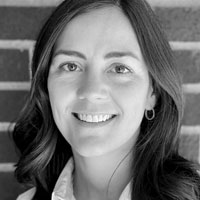
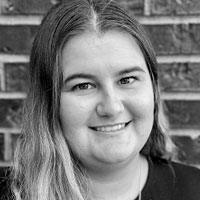
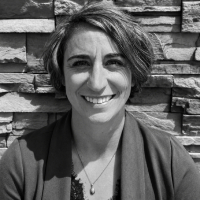
MENUFaith Swords, LICSW
Faith Sword’s Therapist Disclosure Statement <<< (Clickable)
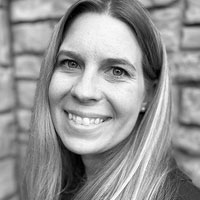
My approach to therapy is relational, warm, and candid, with strong doses of humor when appropriate. I generally spend at least one session getting to know you and your life and one session getting to know the reason you are coming to therapy. At that point, we will identify preliminary treatment goals and what might be helpful in meeting them. I enjoy sharing knowledge with my clients about mental health, including understanding diagnosis, learning about different treatment options, and providing resources for further education. My therapy practice is grounded in attachment theory, mindfulness/contemplative practices, and the NASW’s Code of Ethics: service, social justice, dignity and worth of the person, importance of human relationships, integrity, and competence.
Social justice and advocacy for human rights have always been central to my identity both as a therapist and as a person. As an American macroculture, we are experiencing more external pressures – economic, political, existential – that must be integrated with our personal lives, beliefs, and identities. Each of us also belongs to a microculture that will experience the same systemic challenges with more or less emphasis depending on various factors. Each of these challenges must be integrated into our functioning somehow. In my experience, more integration results in better functioning, while less integration tends to result in limits to function.
I am the proud mother of two daughters and have found parenting and learning about human development to be among the most rewarding experiences of my life. I believe in supporting your development as a parent while you and your children move through stages of life. I enjoy working with the challenges of early childhood as well as helping parents build relationships with their older children. I believe that it is fundamentally important to respect and celebrate children’s intellect, imagination, and autonomy. I also believe that our development as parents affects our children’s wellbeing as well as our own. Learning how to set boundaries and limits, communicate effectively and respectfully, and manage complicated feelings are all important relational processes between parents and children.
Therapy is a second career for me. I received my undergraduate degree in political science from the University of Illinois at Urbana-Champaign and spent 10 years working in the legal, tech, and regulatory sectors in Washington, DC, before obtaining my Master of Social Work from the Catholic University of America in 2018. Engaging with the private sector, particularly the law and technology sectors in the 2000s and 2010s, has resulted in a wealth of knowledge of and experiences with professional contexts and institutional experiences that cannot be learned in school. The intersection of technology, executive functioning, and mental health is an increasing focus for me. My pre-pandemic work focused on crisis support, family homelessness, education advocacy and child welfare. During the pandemic, I relocated to the west coast and moved into fulltime private practice. I am a licensed clinical social worker in the States of Oregon (L12402) and Washington (LW.70054978).
I enjoy spending time with my husband, daughters, and extended family. I have lived in 8 states and the District of Columbia and visited 3 continents. I have some conversational proficiency in 5 languages and have been playing video games recreationally since about 1994. Being close to nature is important to me, as are elaborate cooking projects and boring podcasts and audiobooks about history.
Specialties and areas of focus
- Perinatal mental health
- Fertility/infertility
- Perimenopause/Menopause
- Relationship issues
- Parenting (babies, children, teens, young adults)
- Gender exploration
- Existential anxiety
- Mindfulness and meditation
- Grief, loss, and trauma
- Executive functioning
Q&A with Faith
1.) Some therapists are more comfortable addressing the immediate problem, while others want to focus on the deeper issue. Which are you?
The classic therapist dodge here is that it depends on the client and the problem. In general, I believe that immediate problems are almost always influenced by deeper issues, but it has been my experience that it’s often hard to address deeper issues when pressured by immediate problems. Accordingly, I try to work with past, present and future concerns, and my emphasis tends to be on whatever concern feels the most urgent or distressing for you.
2.) Do you tend to lead the session, or follow my lead?
I will always follow your lead if you are coming to session with a specific concern. I am also always happy to suggest topics for the session or ask questions stemming from previous sessions if you don’t have anything specific to talk about. I enjoy goal-setting and values identification exercises, so if neither of us has a topic in mind, I usually default to one of those two avenues of inquiry.
3.) What are your strengths as a therapist?
I truly enjoy my relationships with my clients. I am curious and have a somewhat superhuman ability to remember the little details of your life that may only seem important to you. I will remember your favorite song and your favorite color. I will remember your birthday and your dog’s name. I will celebrate your successes and grieve your losses with you. Therapy is a second career for me – prior to obtaining my MSW, I worked for over a decade in Washington, DC in the business, technology, and legal sectors, which provides life experience and context for many challenges that working adults face that cannot be learned in school. This in addition to training in multiple contemplative practices has allowed me to develop a well-rounded practice that is interested in and supporting of the whole person.
4.) If you had one superpower, what would it be and why?
In addition to the memory superpower I already apparently have, I would love the ability to teleport. There are so many amazing things in the world that I will never get to see because the distance, time, and cost of traveling to them is prohibitive for most mere mortals. If I had the ability to travel instantaneously, I would pop up to the summit of Mt. Everest to see the view from the top of the world.
5.) What makes you laugh?
Almost anything and, potentially, everything! I particularly enjoy bad puns and dad jokes and word play. I have been told that I use humor to cope, but I don’t think this is a bad thing. I am almost always able to see the silly or absurd side of even the most distressing problems eventually, and sometimes the introduction of absurdity can reduce distress.
6.) Who would you have dinner with, dead or alive?
The mind immediately identifies dozens of dream dinner guests! One answer would be Eleanor of Acquitaine, Queen of France and then England, because I love history and strong women. Another answer would be my father, who died in 2022, because there are so many things he’s missed that I would love to share with him.